
Lacquerware
Layered surfaces, intricate decoration and a deep, quiet shine.
Explore craftDiscover the materials, techniques, and makers behind the objects we bring into everyday life.
Layered surfaces, intricate decoration and a deep, quiet shine.
Explore craft
Color and pattern shaped by cloth, dye and the maker’s hand.
Explore craft
Thread becomes line, color and texture, one stitch at a time.
Explore craft
Fine metal outlines hold rich colors in enamel.
Explore craft
Bamboo, rattan and vines woven into patterns and everyday forms.
Explore craft
Cut and folded paper becomes silhouettes, open patterns, and window decorations.
Explore craft
Carved lines carry ink from a wooden block to paper.
Explore craftTraditional Chinese handicrafts are part of the East Asian craft traditions we explore at BeenEast.
In embroidery, makers shape petals and leaves one stitch at a time. In lacquerwork, thin coats of tree-sap lacquer are applied and allowed to cure, gradually building the surface.
Discover these techniques in embroidered bookmarks and lacquer jewelry and home objects selected for everyday use.
Go deeper into the materials and the making.
Explore our craft communityAn octagonal silhouette frames a sharp contrast: a vivid red interior, dark outer surfaces, and fine, gold-colored decoration. The lid draws the eye across small motifs before its border gathers them together.

Traditional lacquerwork builds a surface through successive coats. That layered ground can support many kinds of decoration, from carved relief to shell inlay and metal-powder designs, each catching light differently.
Follow the lid’s border, then compare its dense decoration with the uninterrupted red surface inside.
Pale cloth gives way to deeper blue across this wall hanging. Hung vertically, the textile makes those changes easy to follow, from the light upper section to the darker folds and edges below.
Hand dyeing brings color to fiber, yarn or cloth. A maker can develop a continuous field of color or use folds, bindings and stitches to reserve parts of the surface.
Move from the pale upper cloth toward the blue below, noticing where the transition softens.
A small butterfly rests against pale fabric, its wings picked out in dark, green and warm-colored stitches. Gold-colored leaves frame the open space above, giving the tiny figure room to hold your attention.
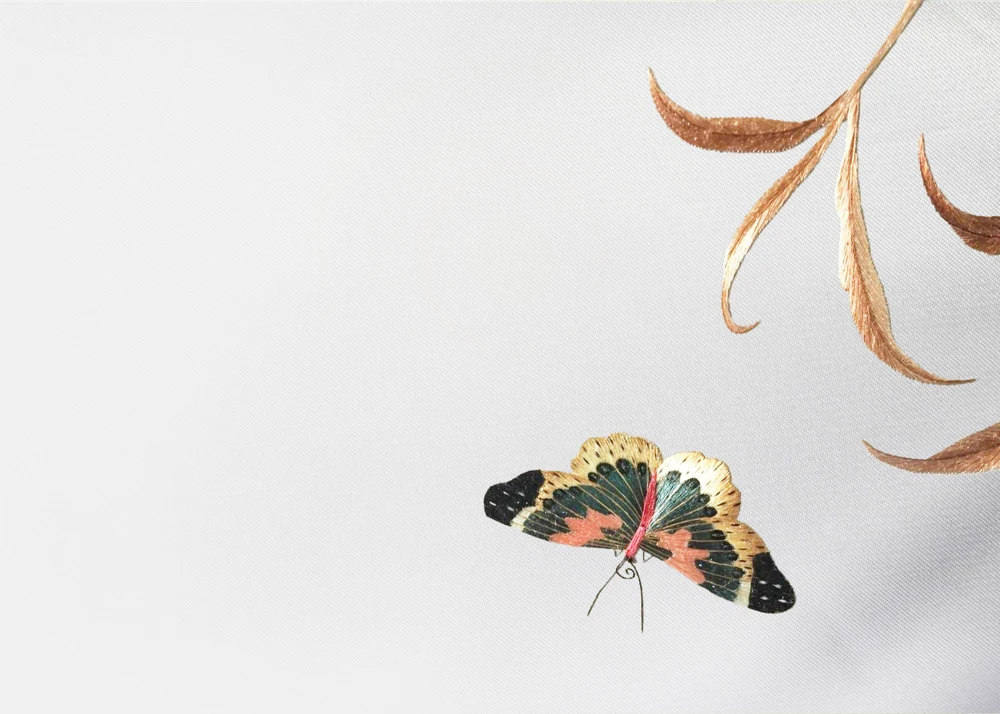
Embroidery gives thread a direction as well as a color. Changes in stitch angle, length and spacing help define an edge, fill a shape and bring texture to otherwise flat fabric.
Follow the curved wing edge and notice how the thread changes direction as it turns.
Look below the gold-colored rim: small floral shapes wrap around the vessel’s curved body. Contrasting colors share the surface, with fine boundaries keeping one part of the pattern distinct from the next.
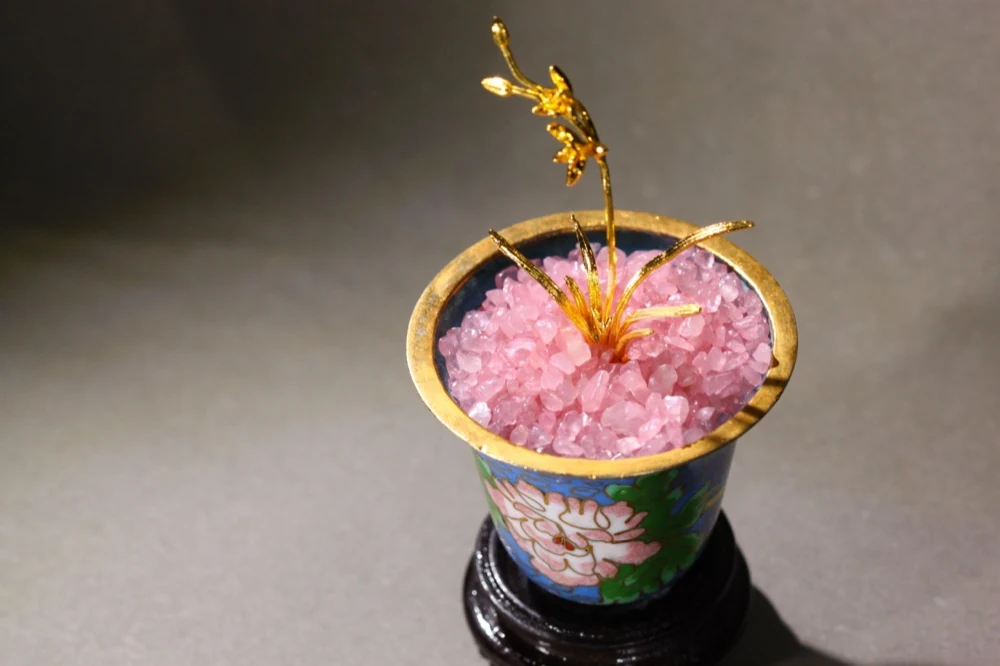
Cloisonné uses thin metal partitions to form cells for colored enamel. Firing fuses the glass; grinding and polishing reveal the boundaries that connect the separate colors into a continuous design.
Look below the rim and follow one floral shape as it curves around the body.
Narrow bamboo strips cross at different angles, opening small spaces between them. Held in a hand, the lattice reveals both its repeating pattern and the individual strands that carry it beyond each crossing.
Botanical weaving builds surfaces by passing plant strands over and under one another. The material, spacing and direction of those crossings shape the pattern; wrapping or tucking can finish its edges.
Choose one bamboo strip and trace it through successive crossings, watching the spaces it creates.
In this red Year of the Dog paper cut, curling stems and flowers surround the dog. The openings give each detail its outline, while narrow strips of paper hold the pattern together.

In Chinese paper cutting, makers use scissors or a knife to cut a design. Cutting through folded paper can create mirrored shapes. On a window, light passing through the openings makes the pattern easier to see.
Start beside the dog and trace the paper around an opening. Notice where a thin strip keeps a stem or petal attached.
Two figures stand in relief on this Qing dynasty block for a Zhuxian Town New Year print. Look at their sleeves and faces to see how narrow grooves give the raised shapes their edges.

The carver removes wood around the design. The printer brushes ink onto the raised areas, lays paper over the block, and rubs the back of the sheet to transfer the ink.
Trace a sleeve on the block. If you see the matching print, look for that sleeve on the opposite side: the design reverses as it transfers.

